What is Mid-Century Modern?
Mid-Century Modern
in California:
Understanding an
Iconic Design Style
What is Mid-Century Modern?
Mid-Century Modern is a major American design movement that developed between 1945 and 1965, right after World War II.
At that time, the United States was experiencing rapid economic growth. The goal was simple: create design that was modern, functional, and accessible to a wide audience.
It marked a clear shift away from traditional styles, introducing more freedom in shapes and a new way of thinking about living spaces.
You can recognize Mid-Century Modern through several
key elements:
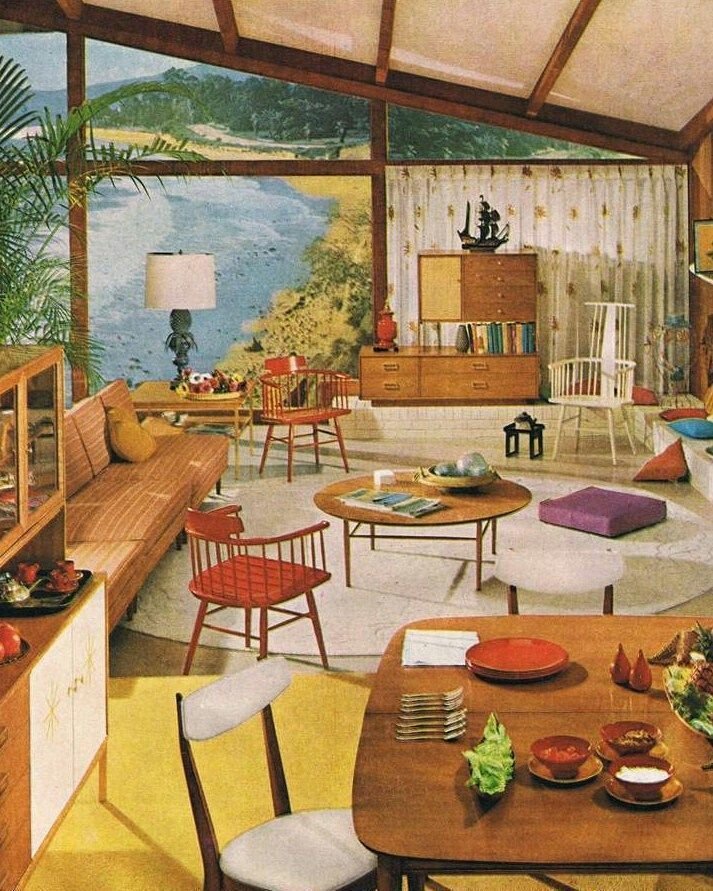
large glass windows that bring in natural light
organic shapes that feel soft, rounded, and welcoming
a strong use of glass in furniture, lighting, and decorative objects
flat or low-pitched roofs
a mix of natural materials like teak or walnut with modern ones like aluminum or fiberglass
bold colors such as mustard yellow, green, orange, and turquoise
It’s a modern style, but never cold. It’s designed to feel warm, livable, and connected to its environment.

Why California became
the epicenter?
California quickly became the perfect setting for this design movement.
First, because of the climate. The mild weather allows homes to open up to the outdoors, creating a seamless connection between indoor and outdoor spaces.
This is where Charles and Ray Eames settled after their marriage. In 1949, they designed the iconic Eames House, located in Pacific Palisades.
With its large glass panels, the house perfectly embodies the idea of blurring the boundary between inside and outside.
California also attracted many European architects fleeing the war, including Richard Neutra. He is especially known for the Kaufmann Desert House in Palm Springs, which can be visited during Modernism Week.
Mid-Century Modern is often described as a blend of European rigor and American optimism. The result is a style that feels both functional and deeply human.
A fun historical detail
Interestingly, the term “Mid-Century Modern” didn’t even exist at the time.
It was only coined in 1984, following the release of the book Mid-Century Modern: Furniture of the 1950s by design historian Cara Greenberg.
Why it still inspires today
This is exactly why I love California so much.
You can still find so many homes that reflect this iconic style. It’s timeless, full of light, and incredibly inspiring.
A design movement that continues to shape the way we think about living spaces today.
LIRE LA VERSION FRANÇAISE